
Reclaiming Movement and Strength: Discovering Rose Pilates this Pink October
Every October, landmarks light up in pink and awareness campaigns flood our feeds. But for anyone who has walked through breast cancer (or is currently walking through it) the conversation must go beyond awareness.
The real conversation begins with the day-to-day aftermath: how to live in, trust, and inhabit your body again.
Surgeries, lymph node dissections, radiation, and hormone therapies save lives, but they often leave behind an invisible barrier called kinesiophobia: the fear of movement.
The instinct to guard the arm, keeping it pinned to the torso out of fear of pain or swelling.
The anxiety of reaching up to a high cupboard to grab a coffee mug.
The panic that can surface at the mere thought of lying flat on your stomach again.
The heartbreak of hesitating before picking up a child or lifting a travel bag.
Healing requires more than just resting; it demands relearning that your body is not broken. This is where Rose Pilates steps in.

What is Rose Pilates? An Expert Clinical Foundation
Rose Pilates was developed by French physiotherapist Jocelyne Rolland. Originally created in the 1920s by Joseph Pilates to rehabilitate and condition dancers, classical Pilates revolves around precise posture, core engagement, and biomechanical alignment.
Rolland recognized that women recovering from breast cancer needed those exact foundations, not as a passive stretch routine, but as targeted oncological rehabilitation.
Surgical scars and radiation cause fascial adhesions, retracting pectoral tissues and pulling shoulders forward into a protective hunch. This imbalance overworks the upper back and locks the ribcage. Rose Pilates is not an "easy" or watered-down version of Pilates. Instead, it targets weakened and retracted areas with millimeter precision, re-establishing balance without joint impact or strain.
Myths vs. Realities in Post-Surgery Recovery
Myth | Reality |
"I should rest my arm as much as possible to avoid complications." | Prolonged immobility leads to frozen shoulders and muscle wasting. Safe, progressive movement acts as a natural muscular pump to promote lymphatic flow. |
"Adapted exercise means it won't be challenging." | Rose Pilates requires intense mental focus and deep postural control. It strengthens the core, refines posture, and rebuilds endurance safely. |
"I will never be able to lie on my stomach or bear weight on my hands again." | With guided, step-by-step progressions, you learn to unload tension and safely return to prone positioning and arm-supported postures without pain. |
A 30-Second Reset: Try This Now
You don't need equipment to feel how alignment creates space. Try this subtle reset while sitting:
Lengthen your spine: Sit tall, feet flat on the floor, imagining a gentle string lifting the crown of your head.
Release the shoulder guard: Inhale deeply through your nose, directing the air into the sides and back of your ribs, like your ribcage was a parachute.
Exhale and anchor: Blow the air out gently through pursed lips, think of blowing soflty through a straw. As you exhale, imagine your shoulder blades sliding gently downward toward your back pockets, widening the collarbones without forcing the chest forward.
Notice how that single breath creates breathing room in the upper chest without pulling on delicate tissue.

Who Can Practice?
Rose Pilates welcomes women (and men) at any stage of their journey, before surgery (for stronger muscles so rehabilitation is easier) during treatment, post-reconstruction, or years into survivorship, as long as your surgeon or oncologist has provided clearance for adapted physical activity. If you wear a compression sleeve, you can keep it on during class. When executed with correct alignment, the exercises protect your joints, relieve back tension, and build lasting strength.
Take the First Step with Bien Être Online Studio
Returning to exercise after medical treatment can feel daunting, but you don't have to navigate it alone or wonder if a movement is safe.
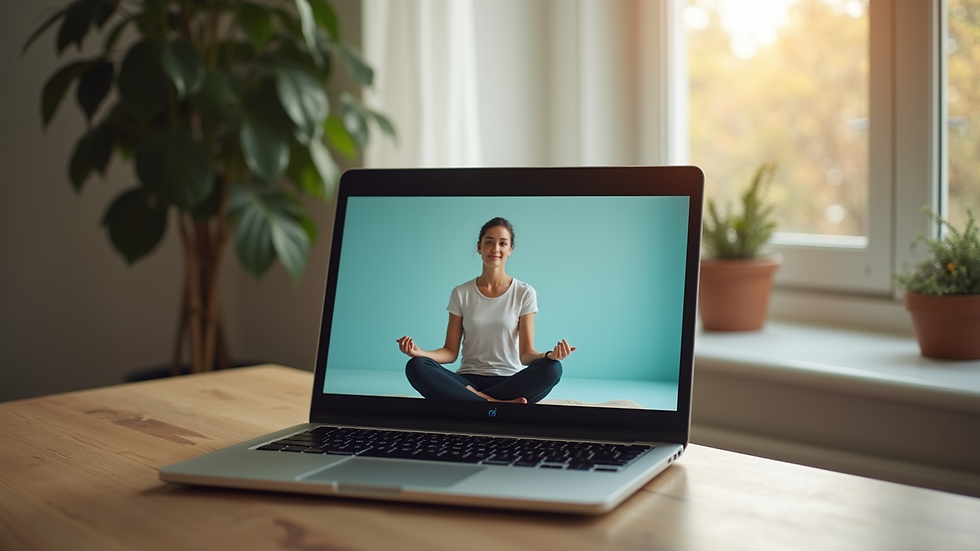
At Bien Être Online Studio, our Rose Pilates classes provide an attentive, compassionate space where every modification is tailored to your surgical history and current comfort level, right from your home.
Not sure where to begin? Start with zero pressure.
We invite you to book a complimentary 15-minute discovery call with us before your first session. We will discuss your recovery, review your range of motion, address any concerns, and ensure you feel confident and supported before you ever step on the mat.
Connect with Bien Être Online Studio today to book your free call and reclaim your movement.

Comments